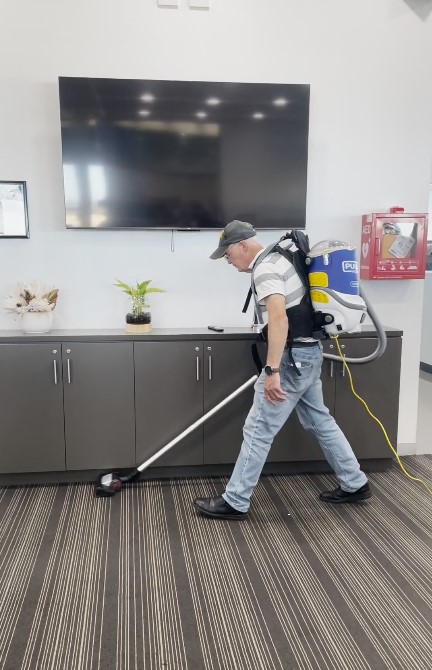
It is easy to think of cleaning as the thing that happens after the real work of the day is done. But for a business, the state of your premises is not separate from how the business runs, it is part of it. Every person who walks through your door, whether that is a customer, a client, or one of your own staff, reads the space before they read anything you say. Understanding what a consistently clean workplace actually does for a business makes it easier to decide whether the investment is worthwhile, and how to structure the work so it delivers real results.
The first impression happens before you say a word
Think about the last time you walked into a shop, office or waiting room that felt neglected: dusty counters, a sticky floor, a bathroom that clearly hadn't been touched in a while. You probably formed an opinion about that business in the first few seconds, and it likely wasn't a fair one, but it stuck. The same happens in reverse. A tidy, fresh-smelling, well-presented space signals that a business pays attention to detail, and customers naturally assume that same attention carries through to how you handle their order, their booking, or their account. Your premises are a silent sales pitch that runs on a loop, whether you're in the room or not.
Staff notice too, and it shows in how they work
The effect isn't limited to customers. Staff spend far more hours in a workplace than any client ever will, and the condition of that space affects morale in ways that are easy to underestimate. A clean, organised office or shopfront feels like a place worth taking pride in. A cluttered, grubby one feels like the opposite, and it's hard to expect people to bring their best effort to a space that nobody bothers to look after. Staff who feel respected by their environment tend to be more settled and more productive, and a clean space is one of the simplest ways to show that respect without saying a word.
Hygiene matters more than most people budget for
Offices, retail counters, break rooms and shared equipment are constantly passing germs between the people who use them, especially the high-touch points that everyone shares:
- Door handles and light switches
- Shared keyboards, phones and eftpos terminals
- Kitchen benches, kettles and fridge doors
- Bathroom taps and fittings
Regular, thorough cleaning of these areas, not just a quick wipe-down, reduces how much gets passed around a team. Fewer people catching whatever's going around a workplace generally means fewer sick days and fewer gaps in rosters, which matters just as much for a small business as it does for a large one. Cleaner surfaces mean fewer opportunities for illness to spread through a team.
Neglect costs more in the long run than maintenance ever does
There's also a straightforward financial argument for staying on top of commercial cleaning. Carpets that are vacuumed and steam-cleaned on a schedule last a great deal longer than carpets that only get attention when they're visibly filthy. Timber and vinyl flooring that gets a proper mop and polish holds up better than flooring that's left to grind grit into the surface day after day. Even things like kitchen benches, glass partitions and bathroom fittings age faster when grime and built-up residue are left to sit rather than being cleaned off consistently. Regular maintenance protects the things you've already paid for. Neglect just means paying for them again sooner than you should have to.
Consistency is what actually makes the difference
None of this comes from one big clean before an important meeting or a once-a-year deep scrub. The better impressions, the steadier staff, the fewer sick days and the longer-lasting fittings all come from the same source: businesses that treat cleaning as a routine part of running the business rather than an occasional chore. A schedule that suits how your space is actually used, whether that's daily, weekly or fortnightly, is what turns cleaning from a cost into something that quietly protects your business every single day.
If your Devonport business is due for a proper look at how it's being cleaned, and how often, our commercial cleaning service is built around exactly this: a schedule that fits your business, done properly, and backed up if it's ever not quite right.
Match the schedule to the way your premises are used
Take a Devonport office with a busy reception but only a few staff working in the back rooms. Cleaning every part of the building equally often may be less useful than prioritising entrances, bathrooms and the shared kitchen. A retail premises with weekend traffic may have a different pattern again. Start with use and condition, then agree on frequency rather than copy a schedule from another business.
Weather and footwear can also shift the priorities. A wet entrance may need attention to tracked-in dirt, while dust and grit can settle along floor edges during drier periods. A simple walk-through after a busy day reveals more about those patterns than floor area alone. Keep the feedback specific so the cleaner can understand whether the scope needs changing.
Separate everyday upkeep from periodic work
Ordinary vacuuming and suitable mopping maintain the main floors, but carpet extraction is a different task with equipment and drying needs. Likewise, wiping an obvious fingerprint does not amount to a complete frontage clean. List specialist work separately so it can be scheduled rather than silently expected in the same routine visit.
For shared facilities, agree what staff will clear and what the cleaner will handle. Dishes left in a sink, stock on a bench or documents on a desk can prevent access. A practical division of responsibilities avoids spending a booked visit moving items that should have been put away beforehand.
A simple way to review the result
Our Devonport commercial cleaning service explains routine workplace work. For separate tasks, explore carpet cleaningor commercial window cleaning. If the workplace is nearby, commercial cleaning in Ulverstone provides a starting point for discussing local timing and access.
Frequently asked questions
Does every workplace need daily cleaning?
No universal frequency fits all sites. Staff numbers, visitors, amenities and the actual build-up should guide the plan. Agree on regular priorities and review them as the premises are used.
How can staff help maintain the result?
Keep accessible desks clear, put away food and dishes, and report new spills promptly. Staff upkeep supports the booked clean; it should not leave uncertainty about which tasks belong to whom.
Is a carpet refresh included in routine office cleaning?
Ordinary vacuuming and extraction are different services. Discuss carpet extraction separately, including the areas and drying arrangements. It should be planned rather than assumed in a regular visit.
What if the business gets busier?
Tell the cleaning contact which areas see more use and when the change begins. Review scope and frequency before expecting extra work in an unchanged appointment. Specific information helps build a useful revised plan.